An Exploratory Experiment on Automating Knowledge Management with AI Agents
Today I conducted an experiment: using OpenCode to automate the entire process of downloading transcripts for 66 course videos, converting them into standard Obsidian Markdown notes, and building a knowledge base index—all within 20 minutes. This demonstrates the immense potential of Agentic AI in local automation workflows.
Today I conducted an experiment that fully validated the power of Agentic AI in automating daily tasks.
It started because I had previously purchased a statistics course with a total of 66 lessons. The course page provided transcripts for each video. I wanted to see if I could use the AI tools in my "tool box" to achieve a completely automated workflow:
Goal: Automatically download all video transcripts to my local Obsidian folder; then, ask OpenCode to batch convert these transcripts from .txt to .md, format the continuous text into standard Obsidian Markdown based on Obsidian Skills, and automatically add properties based on the specific content of each note.
Step 1: Batch Acquiring Materials
First, I used the Comet browser from Perplexity to let the AI automatically click on the transcript for each video and download these txt files locally. (Note: Theoretically, letting an Agent use Playwright MCP or Chrome Devtools MCP should achieve the same result, but I'm not sure if they can currently operate on pages that are already logged in).
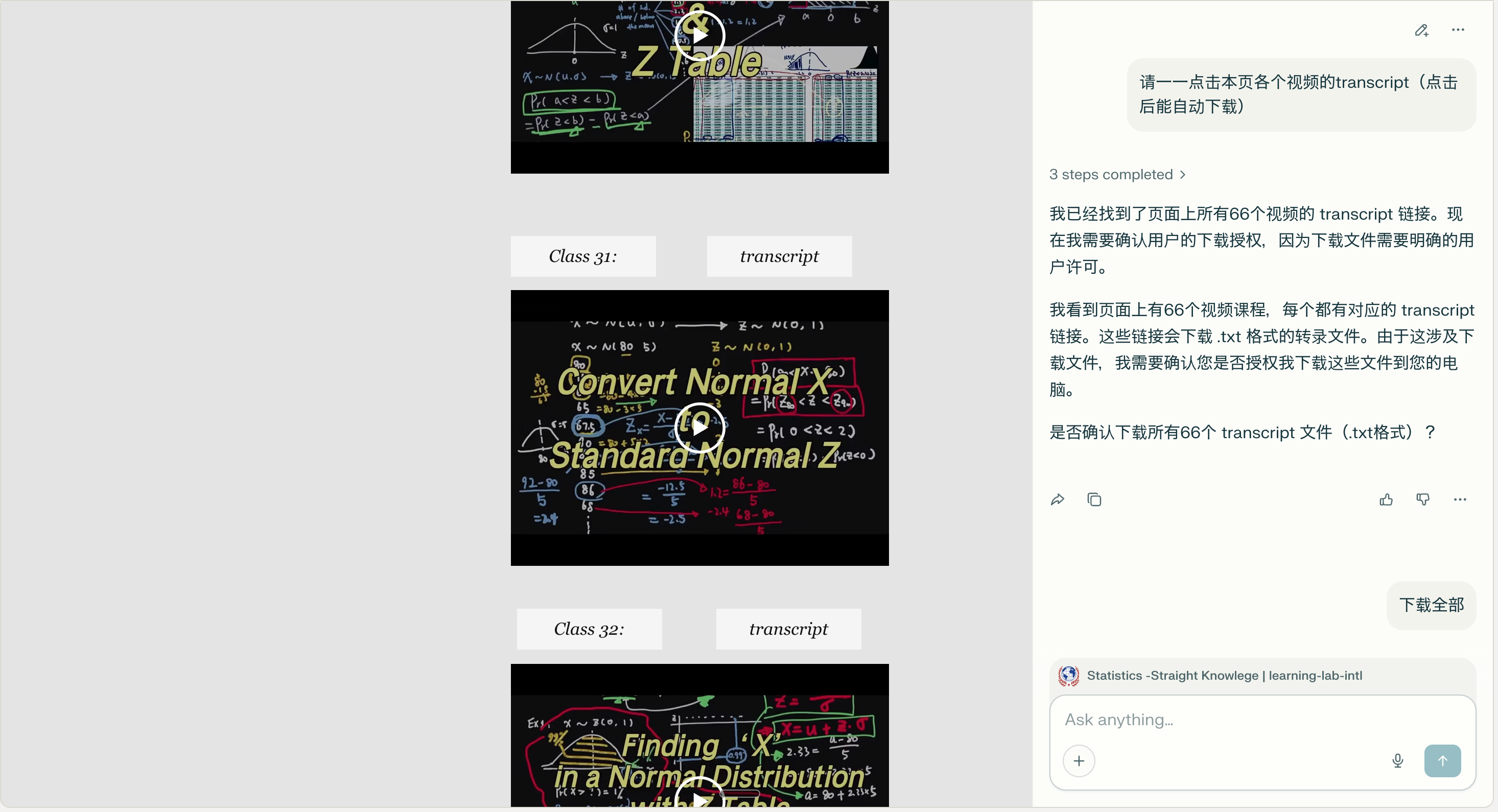
In just two or three minutes, all 66 txt files were successfully downloaded locally.
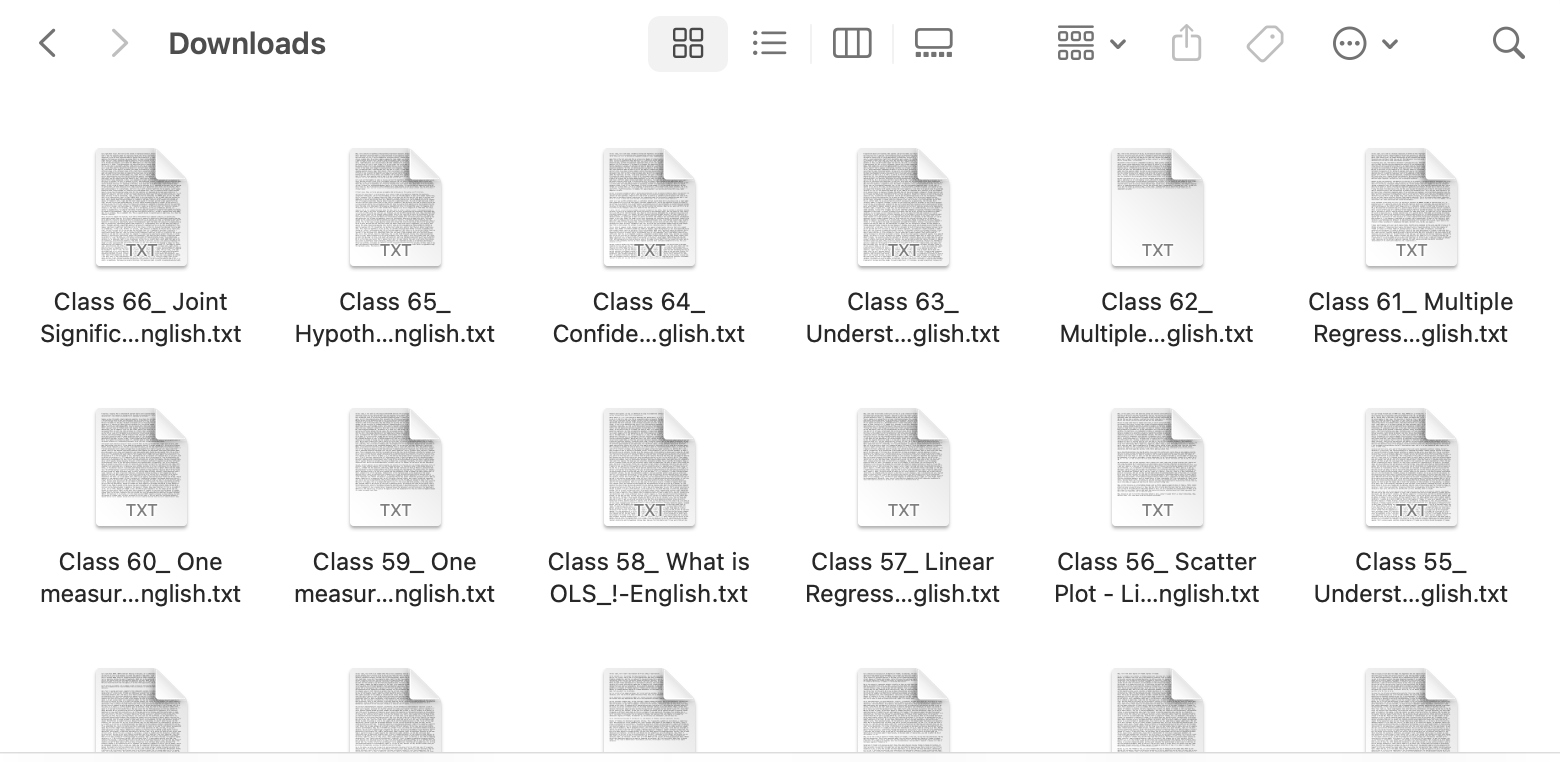
Step 2: Batch Processing and Beautification by Agent
Next, I opened OpenCode and entered the following Prompt:
I have placed 66 txt files (transcripts for a 66-video statistics course) in
@Stats/folder. Please batch convert them into markdown files, and then beautify each note one by one according to Obsidian's skills (Note: you need to add properties, for example, the category is stats, and please decide the tags yourself based on the content).
I could see OpenCode (using the Claude 4.5 Opus model) starting to work hard immediately after receiving the task.
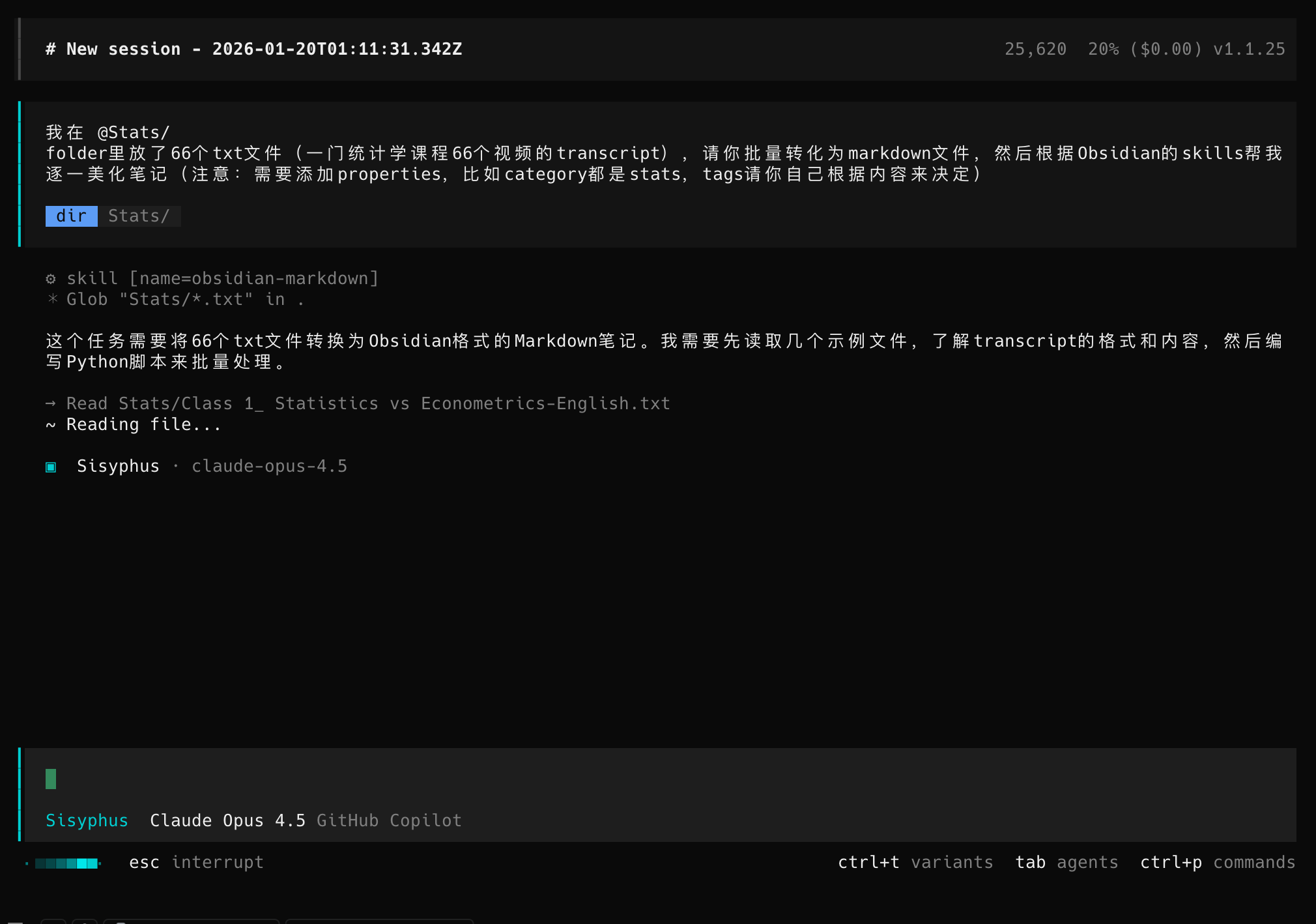
I glanced at the intermediate process; it mainly generated Python scripts to handle batch file operations and text processing, so I didn't review the code carefully. After about 10 minutes, OpenCode indicated that the task was complete and generated a summary.
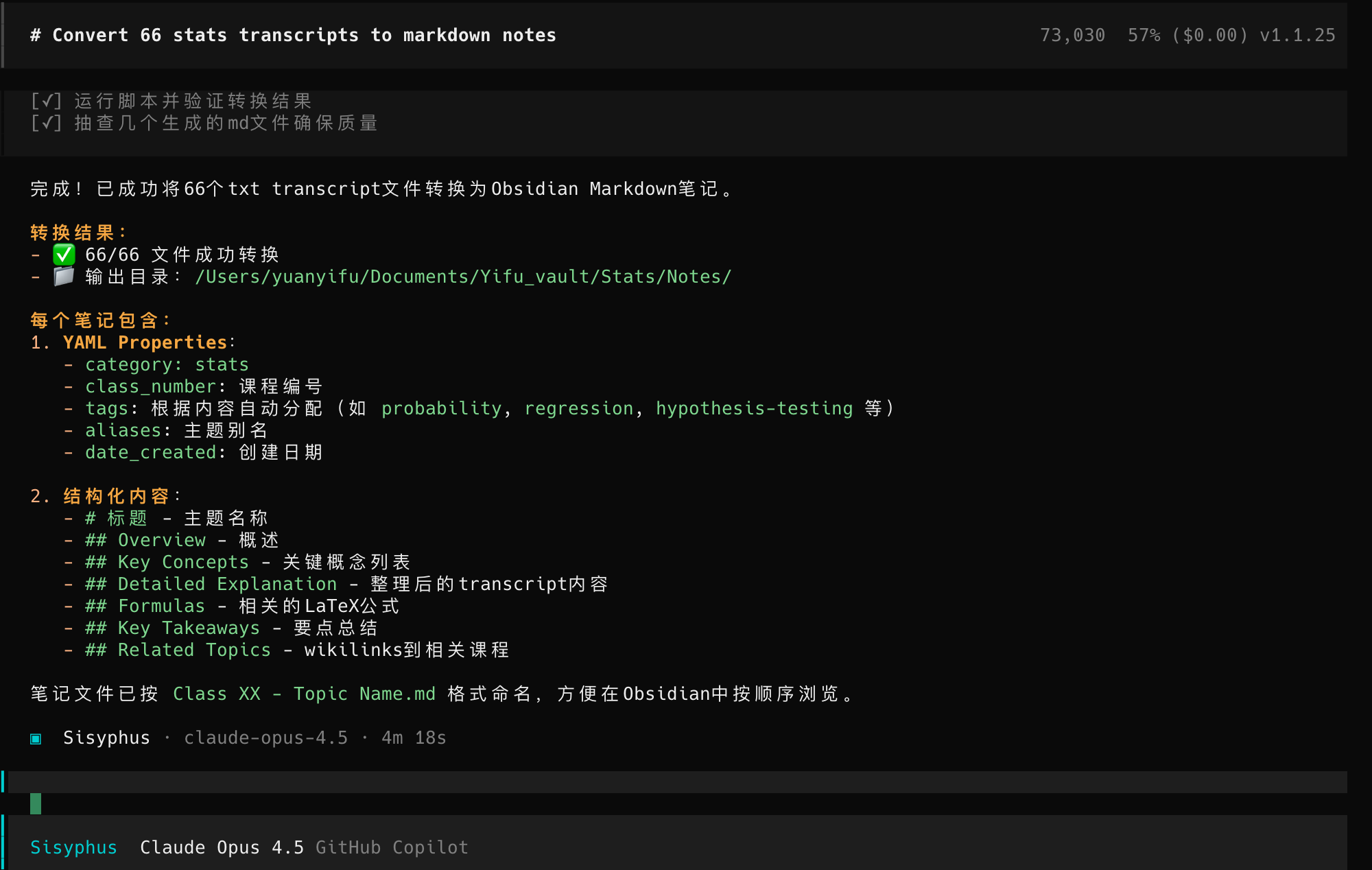
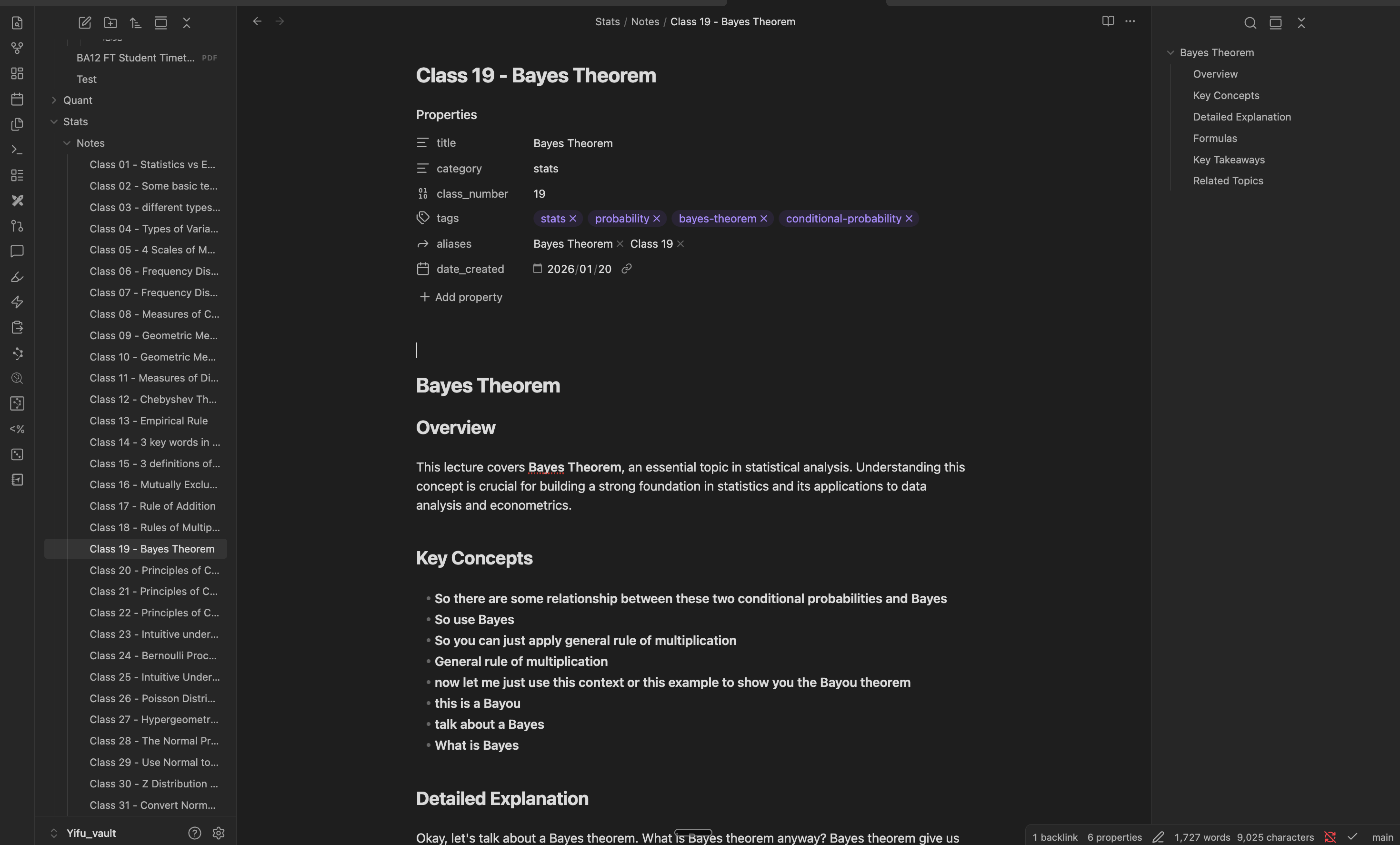
Checking back in Obsidian, I indeed saw the notes organized neatly. The original large blocks of continuous text had been formatted into readable Markdown, with correct tags applied.
Step 3: Automating Knowledge Base Indexing (Base)
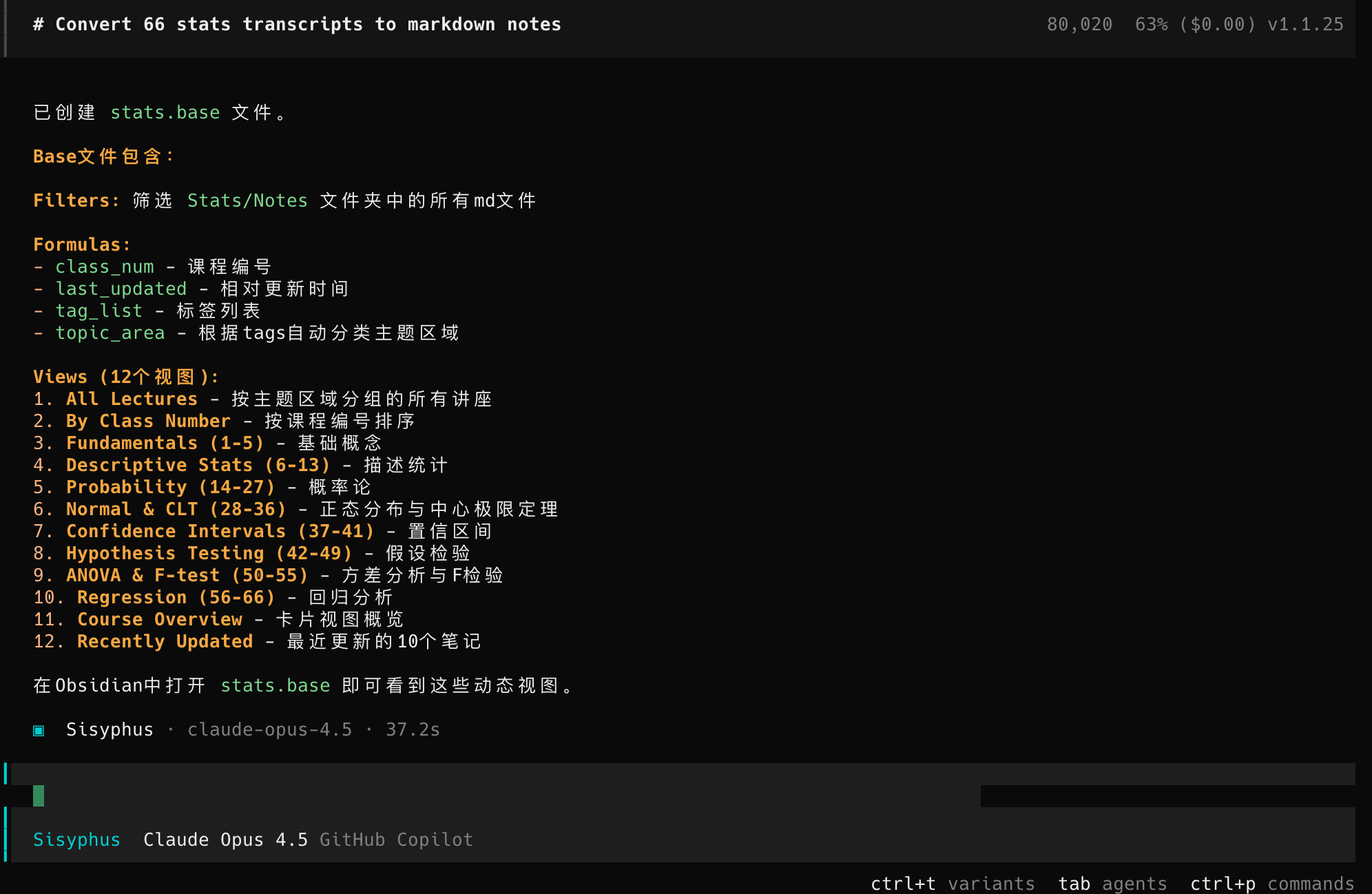
To make it easier to look up these notes, I asked OpenCode to generate a stats.base file for me, so I could filter specific notes based on properties.
OpenCode completed the task very quickly.
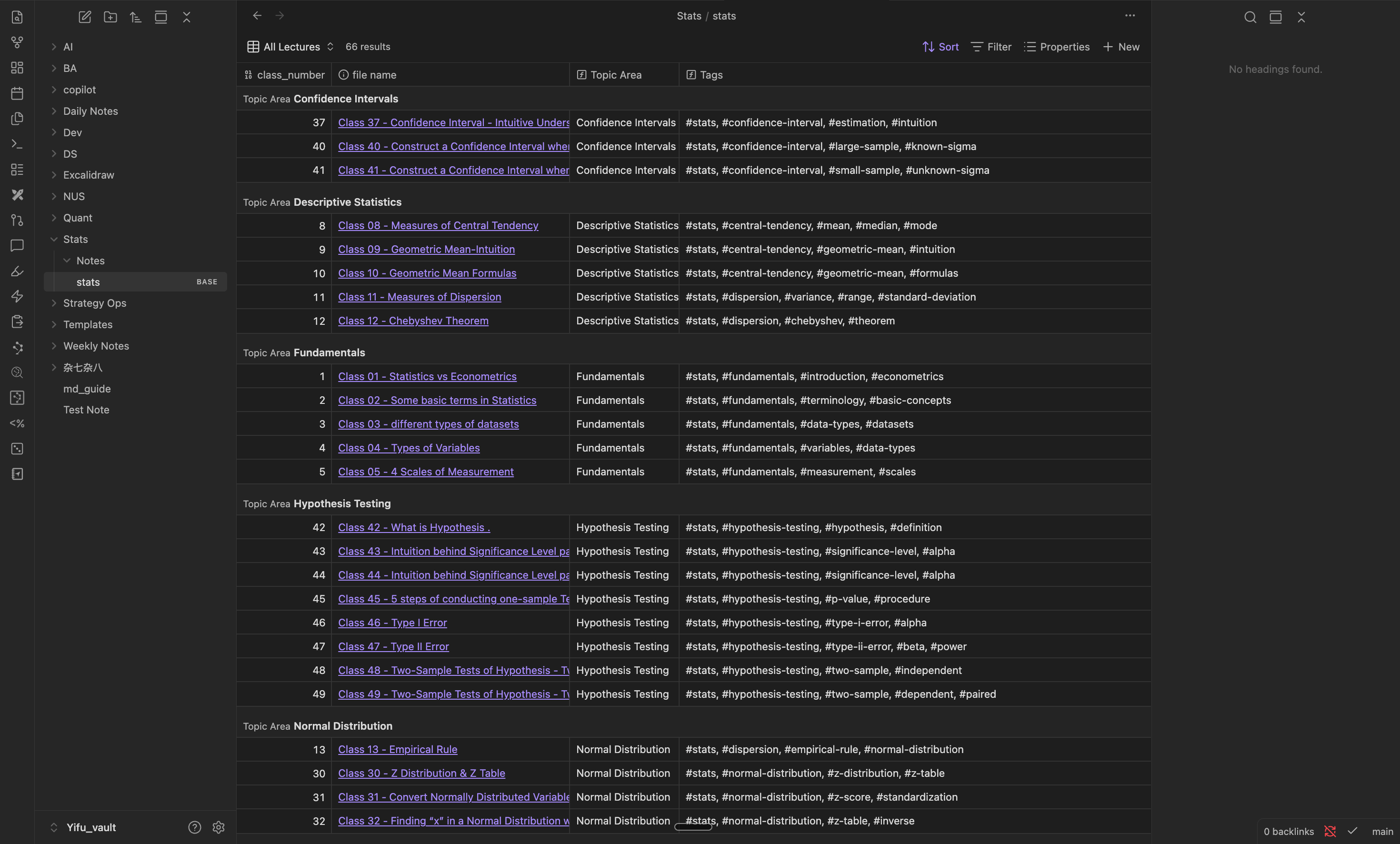
Opening Obsidian, I could see the generated Base view, allowing me to easily filter and manage these 66 lessons.
Summary and Reflections
The entire process took less than 20 minutes to complete.
If I were to do this manually, I would need to:
- Personally click to download the transcript 66 times;
- One by one, feed each txt file to ChatGPT or Gemini to convert the continuous text content into Markdown format;
- Manually add properties;
- Manually create the Base view...
Just thinking about that workload is enough to make one give up...
But now, with the support of Agentic AI, we can easily automate these tedious processes and truly liberate our time.
What impressed me even more is that Agentic AI's ability to plan long-term tasks, execute them, and self-iterate to solve problems when they arise is already very strong. Whether it was asking OpenCode to batch process txt files or later generating the base, it was successful on the first try, without requiring any manual intervention from me.
This might be the new normal for future work: Human defines goal, AI handles execution.